This article is informative, NotaryPublic24 cannot help you with notarization or Apostille of this document. A Last Will and Testament is a legal document that sets out how a person's assets and affairs should be handled after their death. Requirements for valid execution, witnesses, and notarization vary significantly between jurisdictions.
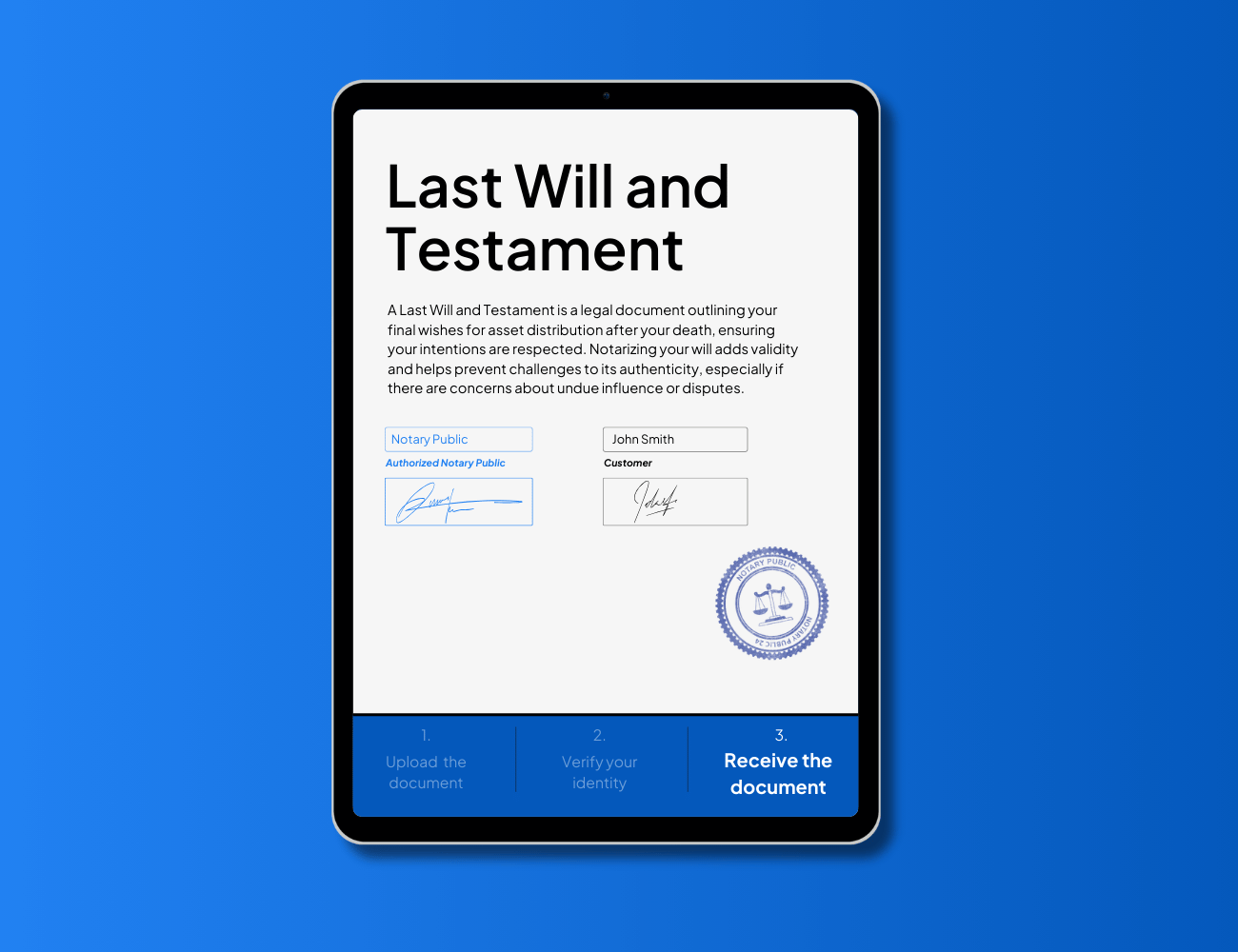
A Last Will and Testament is a legal document that outlines your final wishes regarding the distribution of your assets (property, possessions, money) after your death. Think of it as your final say in how your affairs are handled. It allows you to name guardians for your children, specify who receives your belongings, and even donate to charities. Essentially, a Last Will and Testament ensures your wishes are respected and minimizes potential disputes among your loved ones.
While the specific legal requirements may vary depending on your location, a Last Will and Testament generally needs to be in writing, signed by the testator (the person making the will), and witnessed by a certain number of individuals. This document applies to anyone who wants to ensure their assets are distributed according to their wishes after they pass away. It provides peace of mind and helps prevent confusion or disagreements among family members.
A Last Will and Testament is one of the most important legal documents a person can create. It ensures that assets are distributed according to the testator’s wishes, guardianship decisions for minor children are recorded, and legal disputes between heirs are reduced. The formal requirements for signing, witnessing, and notarizing a will vary by country and jurisdiction.

NotaryPublic24 cannot help with the preparation, notarization, or Apostille of a Last Will and Testament. Here is the general process for creating a valid will:
Speak with a qualified solicitor, estate planning lawyer, or Notary Public in your jurisdiction to understand local legal requirements.
Draft the will according to local law and sign it in the presence of the required witnesses. Formalities differ significantly between jurisdictions.
Store the original will in a safe place and review or update it after major life events such as marriage, divorce, or the birth of children.


You can obtain a Last Will and Testament in a few ways. One option is to consult with an estate planning attorney who can draft a will tailored to your specific needs and circumstances. This is particularly advisable if you have complex assets or family situations. Alternatively, you can find templates and resources online or at stationery stores to create your own will.
However, it’s crucial to ensure the will complies with the legal requirements in your jurisdiction. Regardless of the method you choose, it’s important to carefully consider your wishes and ensure the document accurately reflects your intentions.
Whether a will must be notarized depends on the jurisdiction. Some countries, such as civil-law jurisdictions in Europe and Latin America, require notarial wills drafted by a Notary Public. Common-law countries such as the UK and most of the US generally require a witnessed will but not notarization. If a will is to be recognized in a foreign country, an Apostille may be required. Always consult a qualified local professional to ensure your will meets the legal requirements of your jurisdiction.
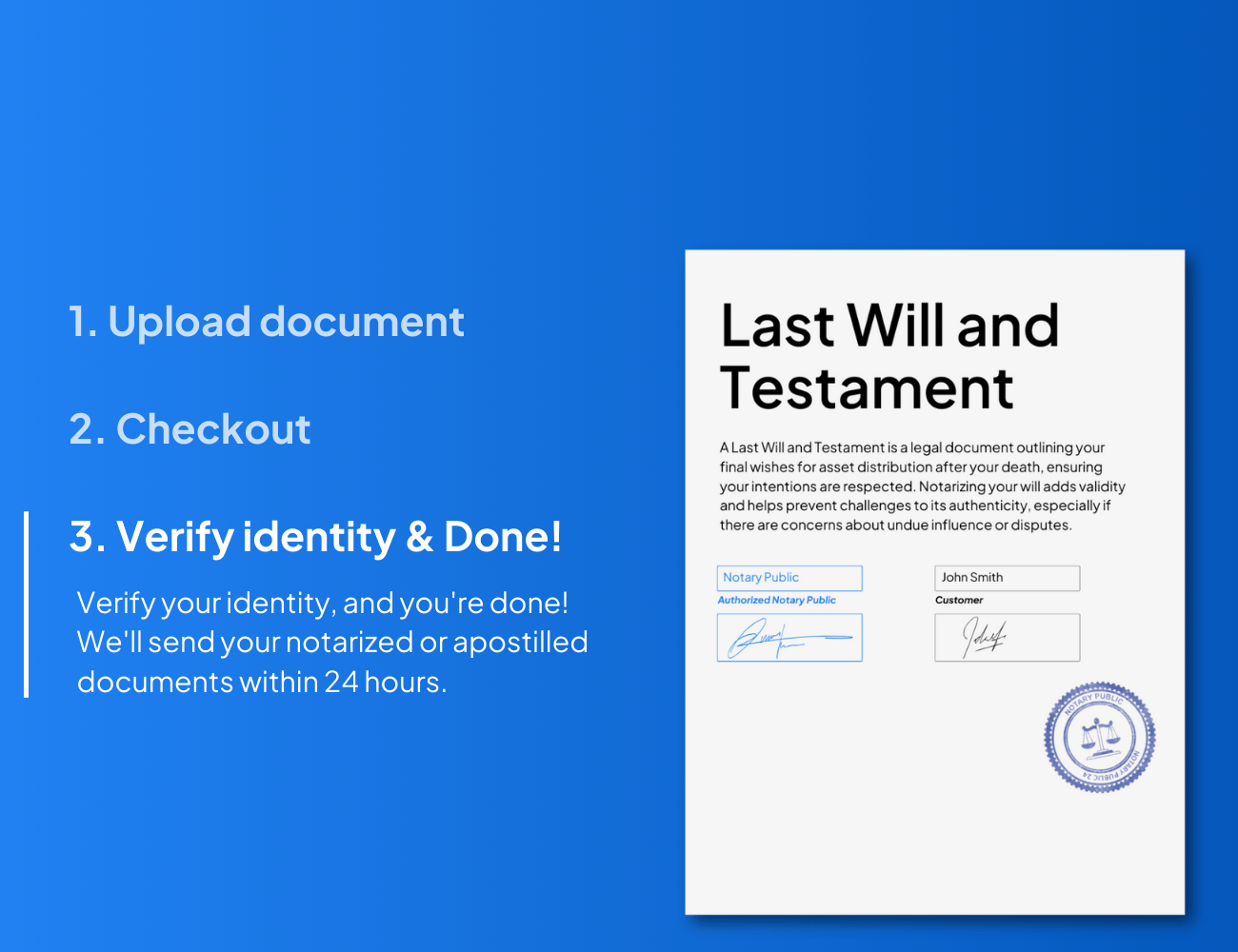

NotaryPublic24 cannot help you with the preparation, notarization, or Apostille of a Last Will and Testament. Requirements for a valid will vary significantly between jurisdictions, and this type of document should be handled by a qualified legal professional such as a solicitor, estate planning lawyer, or Notary Public in your jurisdiction.
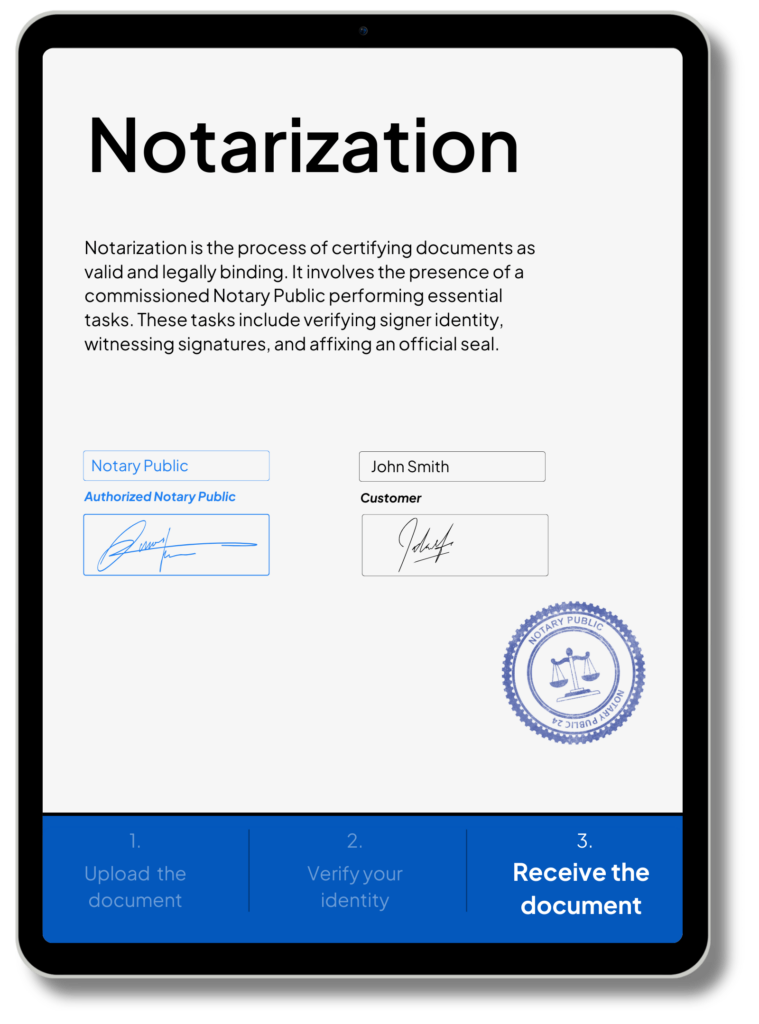
Notarization is the official process of having a document legally verified by a notary public. A notary public is an authorized official who verifies the identities of the people signing a document and confirms that the signatures are authentic. This process makes the document legally recognized and trustworthy, helping to prevent fraud and ensuring its validity for important matters like buying a house, signing a contract, or creating a will.
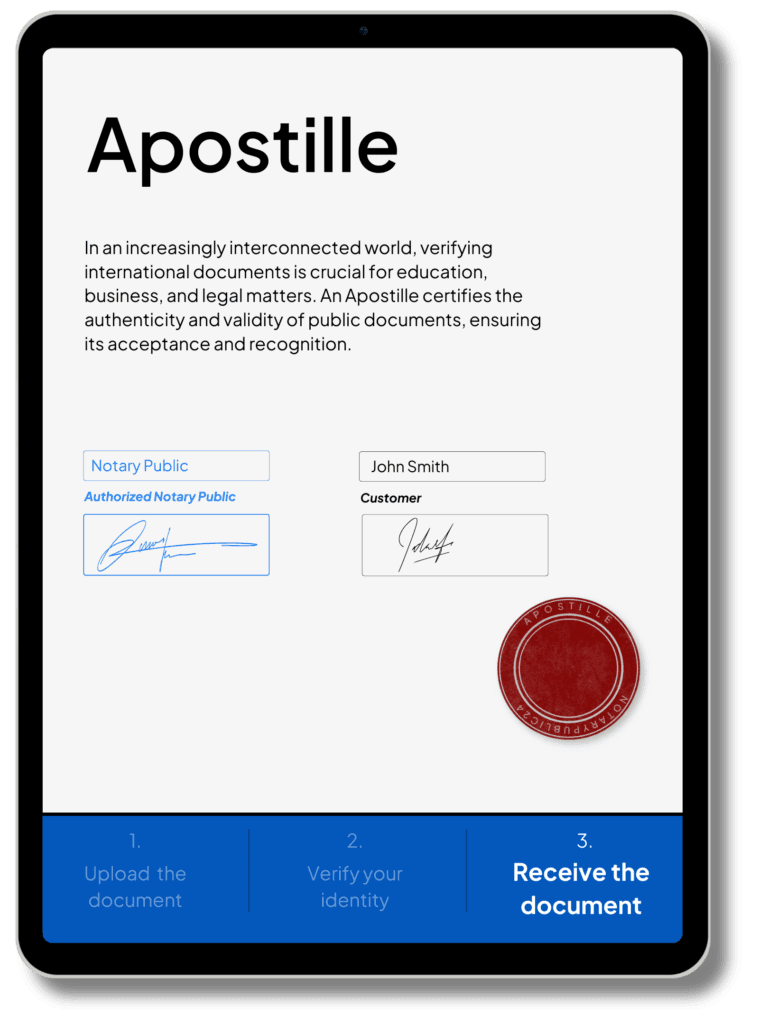
An Apostille is a certificate that makes your document valid in other countries. It's like a stamp of approval that confirms your document is real and can be used in countries that are part of the Apostille Convention. This agreement between countries makes it easier to use important documents like birth certificates and marriage licenses abroad without needing any other certifications. The Apostille verifies the signatures and seals on your document, ensuring it's accepted as genuine.
A Notary Public is an authorized official who has the right to issue certain certificates. An example is the Apostille stamp. A Notary Public is authorized by the state and applies their official seal and signature to certify the documents.
Writing a Last Will and Testament requires careful consideration and adherence to legal formalities. While you can seek guidance from an estate planning attorney, it's also possible to create your own will using available resources. Start by clearly identifying yourself as the testator and stating your intention to create a Last Will and Testament. Then, specify your wishes regarding the distribution of your assets, including property, possessions, and financial accounts. Be sure to name beneficiaries and clearly outline who inherits what. If you have minor children, appoint guardians to care for them. Finally, nominate an executor who will be responsible for carrying out your wishes as outlined in the will. Ensure the document is signed and witnessed according to the legal requirements in your jurisdiction. Remember, clarity and accuracy are crucial in a Last Will and Testament to avoid any misinterpretations.
Drafting a Last Will and Testament involves putting your final wishes into a legally binding document. You can choose to consult with an estate planning attorney who can guide you through the process and ensure your will meets all legal requirements. Alternatively, you can find templates and resources online or at stationery stores to assist you in drafting the will yourself. Regardless of the method you choose, it's essential to clearly state your intentions regarding the distribution of your assets, appoint guardians for minor children (if applicable), and designate an executor to manage your estate. Ensure the document is signed, witnessed, and, if necessary, notarized according to the legal formalities in your jurisdiction.
While notarization may not always be mandatory for a Last Will and Testament, it is often recommended. Notarizing a will can add an extra layer of authenticity and help reduce the risk of challenges to its validity. A Notary Public acts as an impartial witness, verifying identity and confirming the testator signed freely. Requirements vary by jurisdiction, so consult a qualified legal professional in your country. NotaryPublic24 cannot help with notarization of a Last Will and Testament.
Whether a Notary Public can or must notarize a Last Will and Testament depends on the jurisdiction. In some civil-law countries, a notarial will drafted by a Notary Public is required or recommended. In common-law countries such as the UK and most of the US, wills typically need to be witnessed rather than notarized. Consult a qualified legal professional in your jurisdiction to ensure the will meets local requirements. NotaryPublic24 cannot help with notarization of a Last Will and Testament.
No. NotaryPublic24 cannot help with online notarization of a Last Will and Testament. Wills are subject to strict formal requirements that differ between jurisdictions and typically require specific in-person witnessing or notarial procedures. Consult a qualified legal professional in your jurisdiction.
No, you do not have to be physically present to notarize online. However, you need to verify your identity with a government issued ID.