This article is informative, NotaryPublic24 cannot help you with notarization or Apostille of this document. A VIF form (Vehicle Import Form) is a mandatory declaration submitted to the Revenue Commissioners in Ireland when importing a vehicle, providing key details for tax and registration purposes. Supporting documents – particularly ownership proofs from outside Ireland – may require Notarization or an Apostille for legal validity.
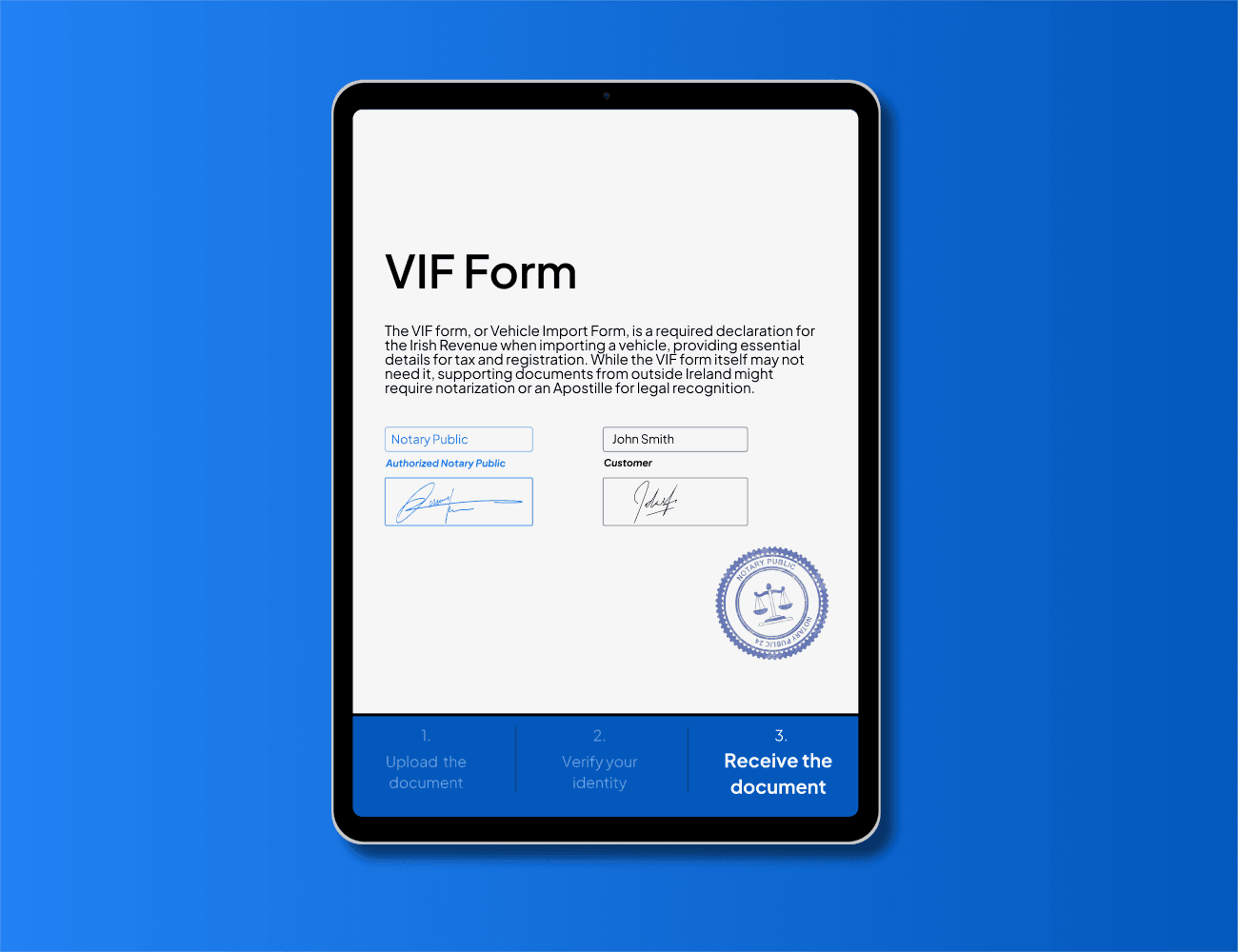
The VIF form, which stands for Vehicle Import Form, is a crucial document required when importing a vehicle into Ireland. Essentially, it’s a declaration that provides the Revenue Commissioners in Ireland with key details about the vehicle being brought into the country.
This form vi helps ensure that the correct taxes and duties are applied and that the vehicle meets Irish registration standards. Completing a VIF form involves providing information such as the vehicle’s make, model, Vehicle Identification Number (VIN), date of first registration, and details of the importer.
This is a legal requirement for anyone looking to register a vehicle that was previously registered outside of Ireland.
Submitting a correctly completed VIF form is a fundamental step in legally importing and registering your vehicle in Ireland. Without it, you won’t be able to pay the necessary Vehicle Registration Tax (VRT) and ultimately obtain Irish number plates.


Typically, you can obtain the VIF form directly from the official website of the Revenue Commissioners in Ireland. They usually provide a downloadable PDF version of the VIF form that you can complete.
It’s advisable to consult the official Revenue website for the most up-to-date version of the VIF form and any accompanying guidance notes. You can often find this information by searching for “vif form ireland Revenue” or similar terms on their website.
For detailed information and the official form, you can visit the official Revenue Commissioners website.
While the VIF form itself doesn’t typically require notarization for submission to the Revenue Commissioners, other supporting documents you might need during the vehicle importation process could benefit from being notarized or Apostilled, especially if they originate from outside of Ireland.
For instance, proof of ownership documents or previous registration certificates might need this extra layer of legal verification.
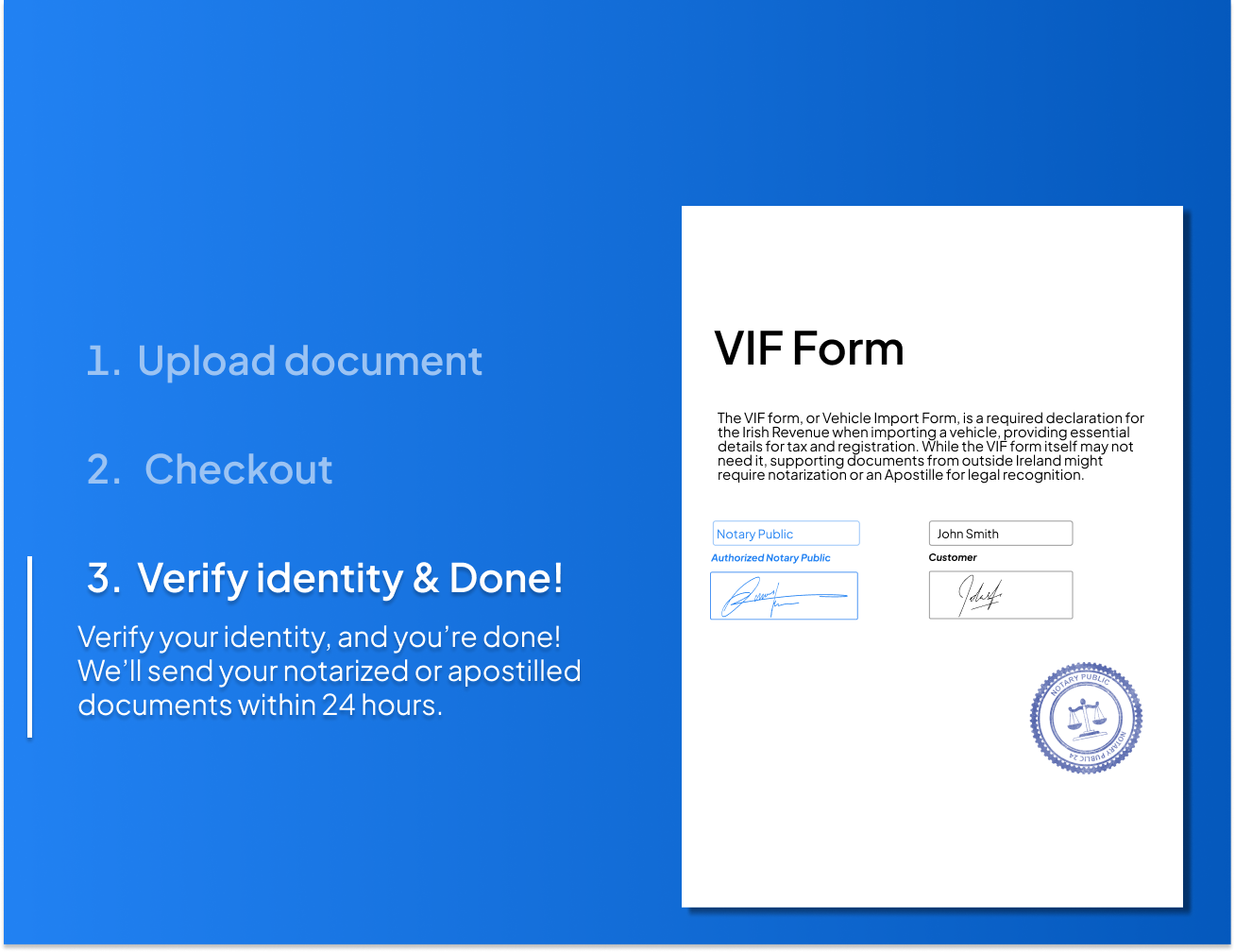
Notarization is the official process of having a document legally verified by a notary public. A notary public is an authorized official who verifies the identities of the people signing a document and confirms that the signatures are authentic. This process makes the document legally recognized and trustworthy, helping to prevent fraud and ensuring its validity for important matters like buying a house, signing a contract, or creating a will.
An Apostille is a certificate that makes your document valid in other countries. It's like a stamp of approval that confirms your document is real and can be used in countries that are part of the Apostille Convention. This agreement between countries makes it easier to use important documents like birth certificates and marriage licenses abroad without needing any other certifications. The Apostille verifies the signatures and seals on your document, ensuring it's accepted as genuine.
A Notary Public is an authorized official who has the right to issue certain certificates. An example is the Apostille stamp. A Notary Public is authorized by the state and applies their official seal and signature to certify the documents.
The VIF form, short for Vehicle Import Form, serves as a vital declaration when you're bringing a vehicle into Ireland. Think of this form vif as the key document that tells the Irish Revenue Commissioners all about the vehicle you're importing. This includes essential details like the car's make, model, its unique Vehicle Identification Number (VIN), and when it was first registered. The purpose of the VIF form is to ensure that the correct Vehicle Registration Tax (VRT) and any other applicable duties are paid, and that the vehicle complies with Irish standards before it can be officially registered. It's a legal necessity for anyone who has a vehicle previously registered outside of Ireland and wants to get it registered there.
You can typically find the VIF form directly on the official website of the Revenue Commissioners in Ireland. Look for a downloadable PDF version of the VIF form that you can fill out. For the most current version and guidance, it's best to search the Revenue website for "vif form ireland" or "vif full form Revenue". The official Revenue Commissioners website is the primary source for this document.
Generally, the VIF form itself does not require notarization when you submit it to the Revenue Commissioners. However, other documents related to your vehicle import, especially those originating outside of Ireland, might need to be notarized or Apostilled to be legally recognized. NotaryPublic24 provides a convenient online service to notarize or Apostille these supporting documents quickly and easily.
A VIF full form typically requires detailed information about the vehicle being imported. This includes its make, model, Vehicle Identification Number (VIN), the date it was first registered, the engine details, and information about the importer. This data helps the Revenue Commissioners assess the correct taxes and ensure compliance with registration requirements in Ireland.
The processing time for a VIF form is typically handled by the Revenue Commissioners once you submit it along with any required documentation and payment of VRT. For the most current timelines, consult the official Revenue Commissioners website.
The Revenue Commissioners in Ireland usually provide instructions on how the VIF form should be submitted, which may include online options. Consult the official Revenue Commissioners website for the latest submission process.



Do you want a free consultation about your case, completely without obligation? Please fill in the form below and we will contact you within a few hours.