
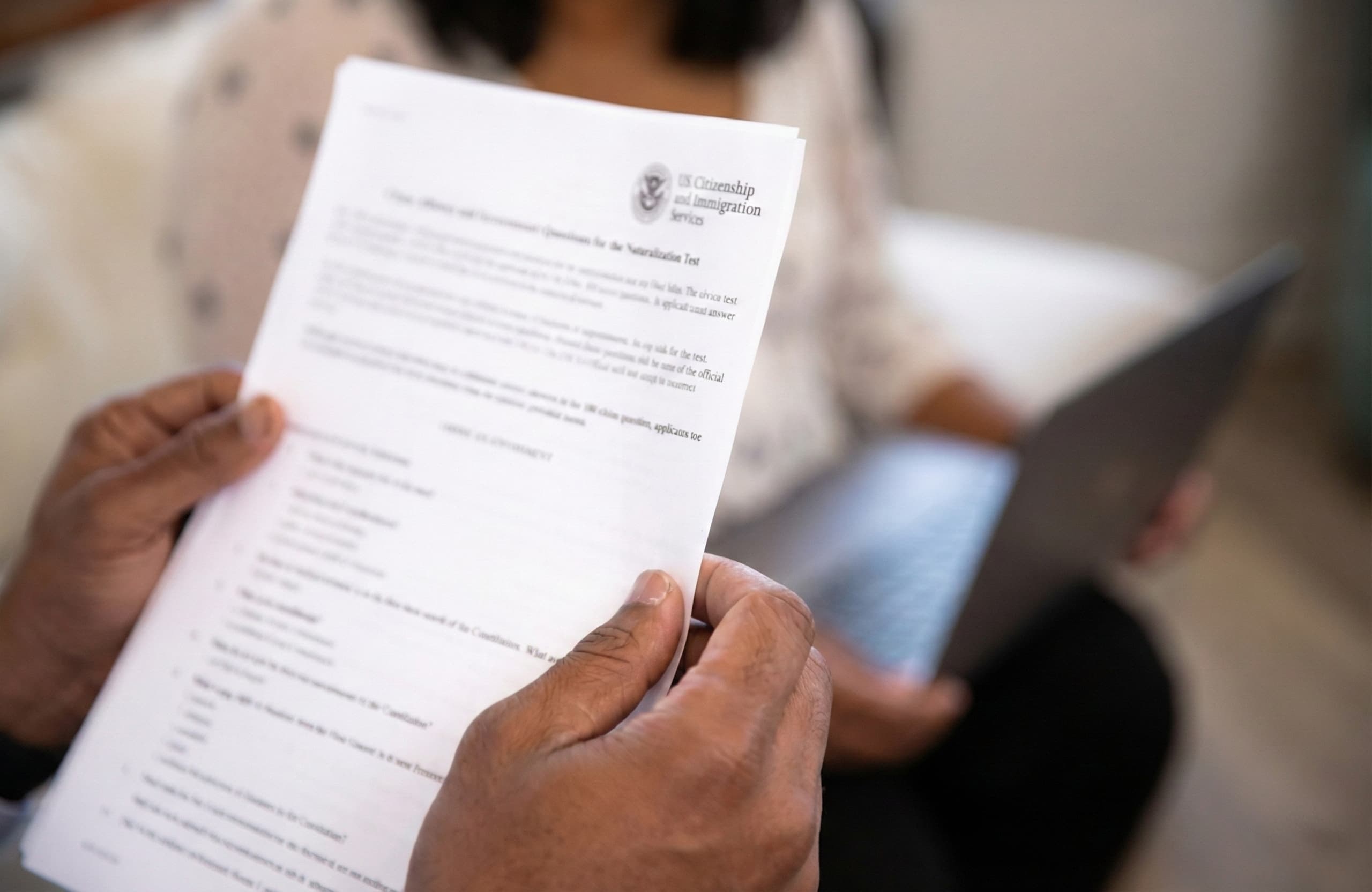
Learn which immigration documents need notarization, when an Apostille is required, and how to get it done online with NotaryPublic24.
Introduction
Immigration applications depend on documentation that is accurate, verifiable, and legally recognized. One of the most common requirements – and one that catches many applicants off guard – is notarization. A document that arrives at an immigration authority without the required Notary Public seal can stall an entire case.
The challenge is that not every immigration document needs notarization, but the ones that do are often the most critical: affidavits of support, powers of attorney, consent forms for minors, certified copies, and translation certifications. When these documents cross international borders, an Apostille may be needed on top of the notarization.
NotaryPublic24 provides a fully online notarization and Apostille service built for exactly this situation – available from any country, with international ID accepted and delivery within 24 hours.
This guide covers which documents need notarization, why it matters, how requirements differ by immigration process, and how to complete it online – including from abroad.
In Short
Immigration documents notarization is the process of having a commissioned Notary Public verify the identity of the signer and certify the authenticity of immigration-related documents such as affidavits, powers of attorney, consent forms, and certified copies. Notarization is required by agencies like USCIS and UK Visas and Immigration to prevent fraud and ensure documents are legally valid. When documents are used in another country, an Apostille may also be required under the Hague Apostille Convention.
What Is Immigration Document Notarization?
Immigration document notarization is the process of having a Notary Public officially verify the signer’s identity and certify that a document is authentic, signed voluntarily, and legally valid. The Notary Public confirms who signed, witnesses the act, and applies an official seal.
This process applies to documents submitted as part of visa applications, green card petitions, citizenship applications, family reunification cases, and asylum claims. Immigration authorities require notarization to prevent fraud, verify identity, and ensure that sworn statements carry legal weight.
A notarized document is not the same as a certified or apostilled document. Notarization verifies the signature. An Apostille authenticates the Notary Public’s authority for international use. Certification confirms that a copy is a true reproduction of the original. Depending on the situation, you may need one, two, or all three.
Which Immigration Documents Need Notarization?
The documents that require notarization vary by country, visa type, and receiving authority. These are the most commonly notarized immigration documents worldwide.
Affidavits of support
A sworn financial commitment from a sponsor confirming their ability to support an immigrant. In the US, Form I-864 requires notarization in specific circumstances. Many foreign governments also require notarized affidavits of support before issuing visas. NotaryPublic24 handles all types of affidavit notarization – including support, identity, residence, and relationship affidavits.
Affidavits of relationship
Sworn statements used to verify family connections when official documentation – such as a birth certificate – is unavailable or insufficient. Immigration authorities may require notarized affidavits from multiple individuals who can independently confirm the claimed relationship.
Powers of attorney
A notarized power of attorney allows a designated person – a family member, lawyer, or representative – to act on the applicant’s behalf in immigration proceedings. This is essential when the applicant is living in another country and cannot attend hearings, sign documents, or manage their case in person.
Consent forms for minors
When a child crosses an international border without one or both parents, a notarized minor travel consent form is typically required by both immigration authorities and airlines. The document confirms that the absent parent or legal guardian has authorized the travel.
Certified copies of identity documents
Immigration applications frequently require certified copies of passports, national ID cards, or permanent resident cards. A Notary Public certifies that the copy is a true and unaltered reproduction of the original.
Birth, marriage, and death certificates
These vital records are central to family-based immigration, spousal visa applications, and citizenship claims. When originals are unavailable or when copies need authentication, notarized birth certificates, marriage certificates, and death certificates are commonly required.
Translation certifications
Documents not in the official language of the receiving country must be translated. The translation typically needs a notarized certification confirming it is accurate and complete. This is a standard requirement for USCIS submissions and consular processing worldwide.
Proof of address
Some immigration processes require a notarized proof of address – a utility bill, bank statement, or tenancy agreement – to verify where the applicant or sponsor currently lives.
Employment verification letters
A notarized employment verification letter confirms the applicant’s job title, salary, and duration of employment. This is often required for work visa applications and residency permits.
Statutory declarations
A statutory declaration is a formal written statement of fact declared to be true by the signer. In Commonwealth countries – the United Kingdom, Australia, Canada, and others – statutory declarations are used in immigration cases in place of or alongside affidavits.
Notarization Requirements by Immigration Process
Different immigration pathways have different documentation and notarization requirements. Here is how the most common processes compare.
Visa applications (tourist, work, student, family)
Visa applicants may need notarized financial documents, affidavits of support, proof of address, and certified copies of identity documents. Requirements vary significantly by country and visa category – always check the specific instructions from the relevant embassy or consulate before submitting.
Green card and permanent residency (US)
US green card applications commonly require notarized affidavits of support (Form I-864), notarized translations of foreign-language documents, and certified copies of civil records. If an original document – such as a birth certificate – is unavailable, USCIS may accept notarized personal affidavits from individuals who can attest to the facts.
Citizenship and naturalization
Citizenship applicants may need notarized copies of identity documents, notarized name change declarations, and supporting affidavits. The specific requirements depend on the country of application and the applicant’s circumstances.
Family reunification and sponsorship
Sponsors submitting family reunification applications are frequently required to provide notarized financial statements, affidavits of relationship, and – when minors are involved – notarized consent forms.
Asylum and refugee claims
Supporting documents in asylum cases – personal declarations, witness statements, identity documents, and country-of-origin evidence – may need notarization to establish credibility with the reviewing authority. Proper notarization strengthens the evidentiary weight of these submissions.
When Immigration Documents Also Need an Apostille
If your notarized immigration documents will be submitted in a country other than where they were issued, you may need an Apostille in addition to notarization.
An Apostille is a certificate issued under the Hague Apostille Convention that authenticates the Notary Public’s seal and signature. It makes the document internationally recognized without further legalization. Over 120 countries are members of the Convention.
Documents that commonly need both notarization and Apostille for immigration purposes include:
- Birth, marriage, and death certificates
- Police clearance certificates
- Powers of attorney
- Academic transcripts and diplomas
- Corporate documents (articles of association, board minutes)
For countries that are not members of the Hague Convention, a longer consular legalization process is required instead. You can verify membership on the Hague Conference member list.
NotaryPublic24 handles notarization and Apostille together in a single order – no need to coordinate with separate government offices.
How to Notarize Immigration Documents Online with NotaryPublic24
NotaryPublic24’s process is fully online, works from any country, and does not require a video call, an appointment, or US-specific identification.
- Step 1: Select your service Go to NotaryPublic24’s services page and choose the notarization you need. Add Apostille to the same order if your documents require international authentication.
- Step 2: Upload your documents Upload your immigration documents in PDF or image format. If you need a standard form – an affidavit of support, power of attorney, or consent form – you can create it directly using NotaryPublic24’s built-in form builder.
- Step 3: Verify your identity Confirm your identity with a government-issued photo ID. NotaryPublic24 accepts passports, national ID cards, and driver’s licenses from countries worldwide. The platform uses biometric verification for secure identity confirmation.
- Step 4: Notary Public review and certification A commissioned Notary Public reviews your documents and applies their official seal and signature.
- Step 5: Receive your notarized documents Completed documents are delivered digitally within 24 hours. A printed and posted copy is available on request.
This process is designed for international clients – whether you are at home, abroad, or anywhere in between.
Get started: https://www.notarypublic24.com/notarization/
Common Mistakes That Delay Immigration Applications
These are the errors that most frequently cause immigration document problems. Avoiding them saves time and prevents rejected submissions.
- Submitting without notarization when required. Always verify the specific requirements from the receiving authority before submitting. Not all documents need notarization, but the ones that do cannot be submitted without it.
- Using a Notary Public from the wrong jurisdiction. Some immigration processes require notarization by a Notary Public commissioned in a specific country or state. Verify the jurisdictional requirement before proceeding.
- Missing a certified translation. Documents in a language other than the receiving country’s official language almost always need a certified or notarized translation. Submitting without one is a common reason for requests for evidence (RFEs) and delays.
- Signing before the notarization process. In many jurisdictions, the document must be signed as part of the notarization workflow – not before. Pre-signing can invalidate the entire notarization.
- Forgetting the Apostille. If the document will be used in another country, check whether an Apostille or consular legalization is required on top of notarization. Missing this step means the document may not be recognized abroad.
- Confusing notarization with certification. Notarization verifies the signer’s identity and signature. Certification confirms a copy is a true reproduction of the original. These are different processes, and immigration authorities may require one or both.
Frequently Asked Questions
Which immigration documents need to be notarized?
The most commonly notarized immigration documents are affidavits of support, powers of attorney, consent forms for minors, certified copies of passports and IDs, birth and marriage certificates, translation certifications, and proof of address. Specific requirements depend on the country and application type.
Does an affidavit of support need to be notarized?
It depends on the receiving authority. US Form I-864 requires notarization in certain cases, and many foreign governments require notarized affidavits of support before issuing visas. Notarizing the document is the safer approach when requirements are unclear.
Can I notarize immigration documents online?
Yes. NotaryPublic24 provides fully online notarization for immigration documents. Upload your documents, verify your identity with a photo ID, and receive notarized documents within 24 hours – no video call or appointment required.
Do I need a US ID to notarize immigration documents?
No. NotaryPublic24 accepts international identification including passports, national ID cards, and driver’s licenses from countries worldwide. A US-specific ID is not required.
Do immigration documents need an Apostille?
An Apostille is required when notarized documents will be used in a country that is a member of the Hague Apostille Convention. NotaryPublic24 handles both notarization and Apostille in a single order.
Can I notarize immigration documents from abroad?
Yes. NotaryPublic24’s online service works from any country. You can notarize and Apostille your immigration documents without visiting an embassy or consulate.
Final Thoughts
Immigration applications leave little room for error, and notarization is one of the steps that cannot be skipped or done incorrectly. From affidavits of support and powers of attorney to certified copies and translation certifications – the documents that need notarization are often the ones that carry the most weight in your case.
NotaryPublic24 provides a complete online solution: notarization, Apostille legalization, and document creation – available from any country, with delivery within 24 hours. No embassy visits, no video calls, no restriction to US-only identification.