Need to notarize or legalize your certificate of origin? NotaryPublic24 provides a fully compliant notary service that adheres to applicable laws and regulations.
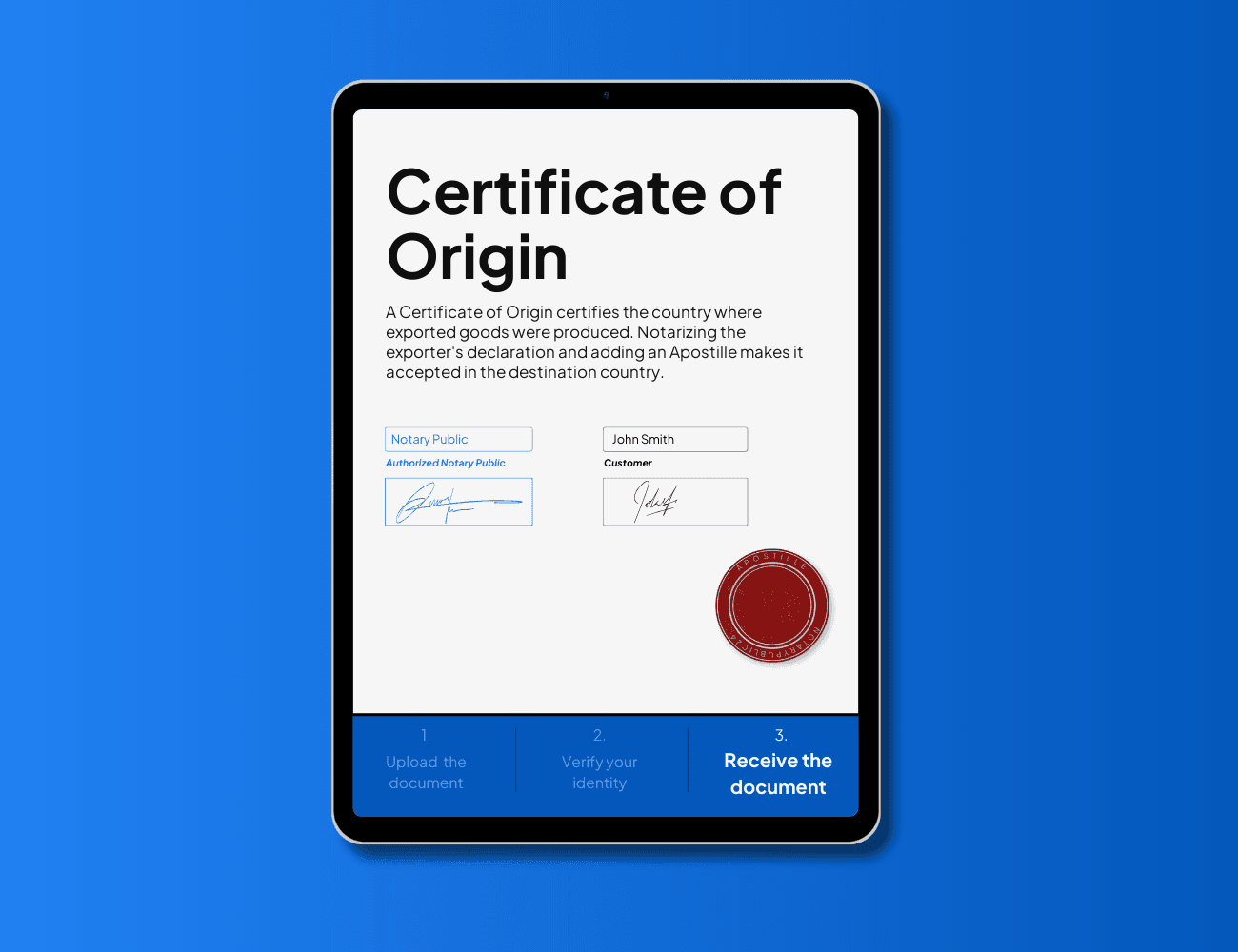
A certificate of origin is an international trade document that certifies the country in which exported goods were produced, manufactured or processed. Customs authorities in the importing country use it to decide which duties, quotas and import rules apply.
There are two main types. A non-preferential certificate of origin simply states where the goods come from, while a preferential certificate is issued under a free trade agreement and allows the importer to claim reduced or zero duty.
The certificate is normally issued or attested by a chamber of commerce on the basis of a declaration signed by the exporter. It states the exporter, the consignee, a description of the goods, their origin and the transport details.
Without a valid certificate of origin, a shipment can be held at customs, charged the highest duty rate or refused entry. Many importing countries require it for specific product categories such as textiles, food, pharmaceuticals and machinery, often together with a certificate of free sale or another export certificate.
Banks also ask for it. When a sale is paid through a letter of credit, the certificate of origin is usually one of the documents the exporter must present before the bank releases payment.
Some destinations demand more than the chamber’s stamp. Countries in the Arab League and several others require the certificate to be legalized by their embassy, and many require the exporter’s signature to be notarized first.
Errors are expensive. A certificate that does not match the commercial invoice or packing list is a common reason for customs delays, so the details must be consistent across all shipping documents.

Certifying documents should be easy. Our process only takes a few minutes, and you will receive your certified documents within 24 hours.
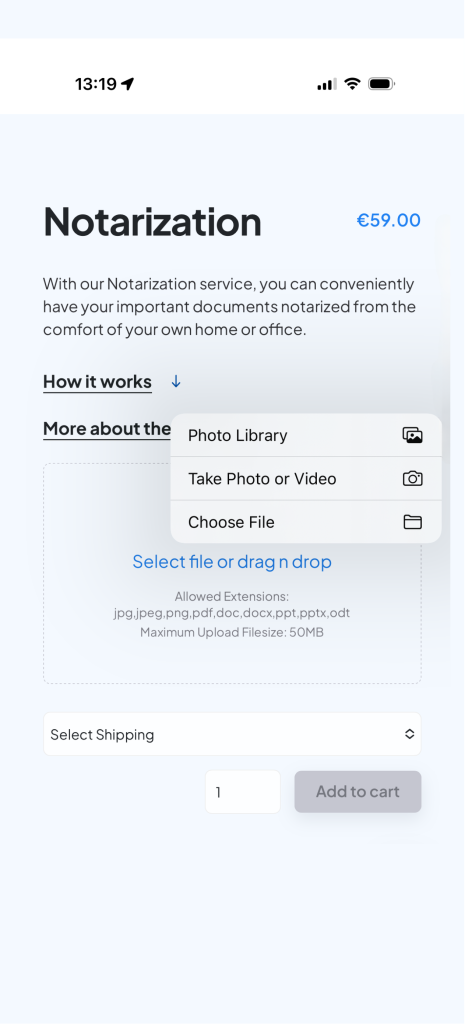
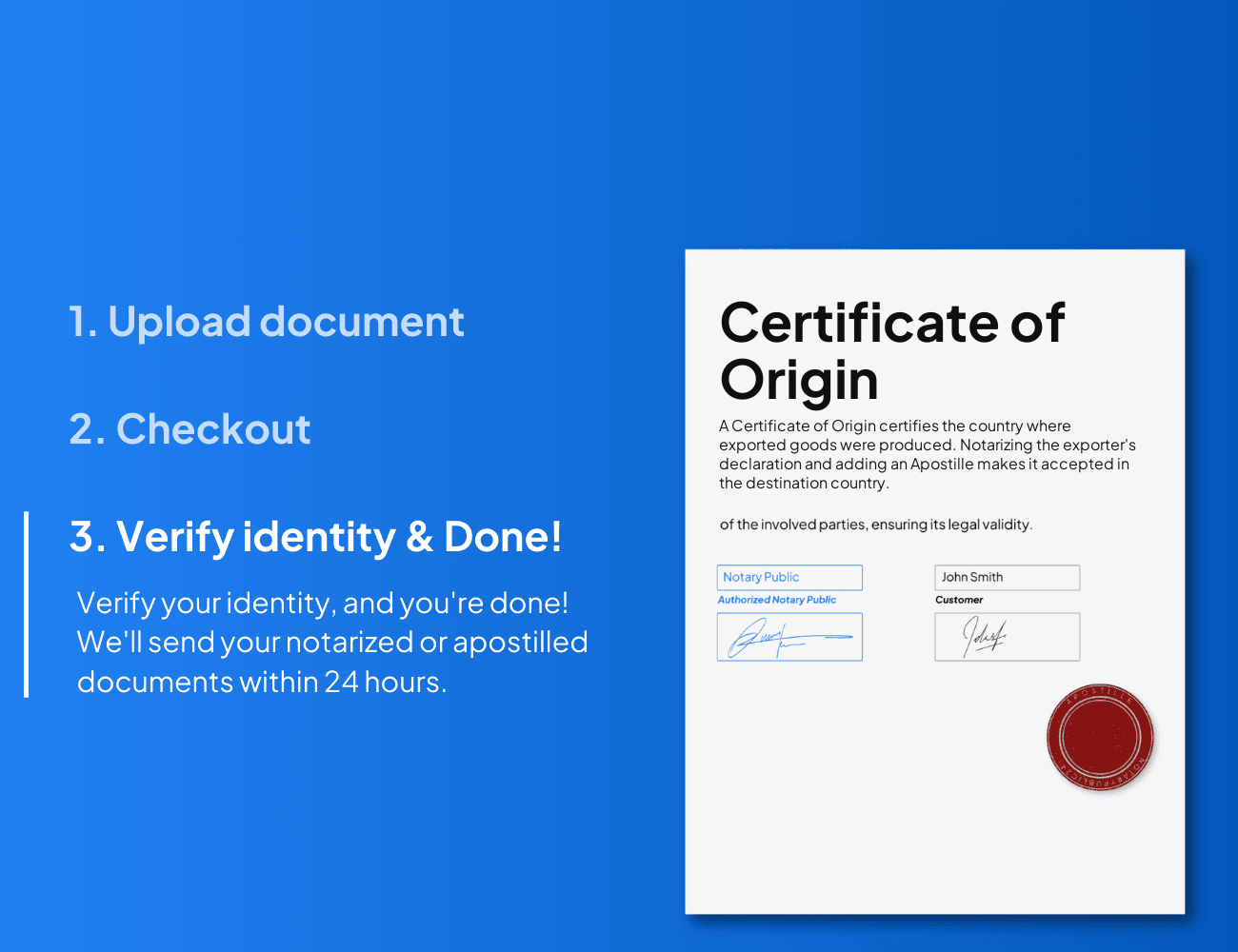
Upload the documents you need notarized or apostilled.
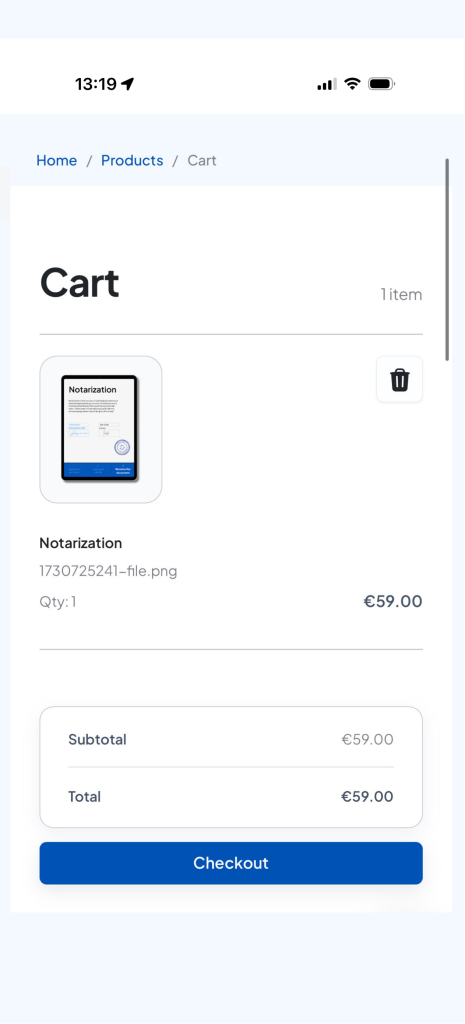
Complete the checkout process, secure and efficient.
Verify your identity, and you're done! We'll send your notarized or apostilled documents within 24 hours.



The exporter completes the certificate of origin form and attaches the commercial invoice and, where required, proof of where the goods were manufactured. The form must match the invoice and packing list exactly.
The exporter’s authorized representative signs a declaration of origin. Depending on the chamber and the destination country, this signature often has to be notarized before the chamber will attest the certificate.
The documents are submitted to a chamber of commerce, in person or through an electronic certificate of origin platform, and the chamber stamps and signs the certificate. Chambers charge a fee, which is usually lower for members.
Under some free trade agreements, such as the USMCA between the US, Canada and Mexico, the exporter or importer self-certifies origin and no chamber is involved. Check the agreement that applies to your shipment before you apply.
Notarization confirms that the person who signed the exporter’s declaration is who they claim to be. Many chambers of commerce and many destination countries require this before the certificate of origin is attested or legalized.
An Apostille is issued on the notary’s signature and seal, which makes the notarization valid in every country that has joined the Hague Apostille Convention. For countries outside the convention, the certificate goes through embassy legalization instead.
The exact chain depends on the destination. A typical sequence is notarization of the exporter’s declaration, attestation by the chamber of commerce and then an Apostille or embassy legalization of the completed certificate.
NotaryPublic24 notarizes the exporter’s declaration and guides you through the Apostille or legalization steps for your certificate of origin, so your shipment is not held up at customs.

Looking for reliable Notary Public services? NotaryPublic24 provides a fully compliant notary service that adheres to all applicable laws and regulations. With our certified Notary Public professionals, we ensure efficient and secure document authentication.
No matter if you are in the need of notarizing documents, or obtaining an Apostille – we will guide and help you throughout the whole process.
Uncertain about your possibilities? Contact us in a way that fits you the best, either by emailing us at “info@notarypublic24.com”, using our “Free Consulting” website form, or by chatting with one of our experts through the live chat application.
An Apostille is a certificate that makes your document valid in other countries. It's like a stamp of approval that confirms your document is real and can be used in countries that are part of the Apostille Convention. This agreement between countries makes it easier to use important documents like birth certificates and marriage licenses abroad without needing any other certifications. The Apostille verifies the signatures and seals on your document, ensuring it's accepted as genuine.
Notarization is the official process of having a document legally verified by a notary public. A notary public is an authorized official who verifies the identities of the people signing a document and confirms that the signatures are authentic. This process makes the document legally recognized and trustworthy, helping to prevent fraud and ensuring its validity for important matters like buying a house, signing a contract, or creating a will.
A Notary Public is an authorized official who has the right to issue certain certificates. An example is the Apostille stamp. A Notary Public is authorized by the state and applies their official seal and signature to certify the documents.
A certificate of origin is normally issued or attested by a chamber of commerce in the exporting country, based on a declaration signed by the exporter. Under some free trade agreements, such as the USMCA, the exporter or importer certifies origin themselves.
You need it when the customs authority of the importing country requires proof of where the goods were produced, when you want to claim a preferential duty rate under a trade agreement, or when a letter of credit lists it as a required document.
Often, yes. Many chambers of commerce require the exporter's signed declaration to be notarized before they attest the certificate, and several destination countries require notarization before embassy legalization. Check the requirements of the chamber and the importing country.
A non-preferential certificate only states the country of origin of the goods. A preferential certificate is issued under a free trade agreement and allows the importer to claim reduced or zero customs duty on qualifying goods.
No. A manufacturer's certificate of origin, or MCO, is a document issued for a new vehicle so it can be titled and registered for the first time. A certificate of origin in international trade is a customs document that states where exported goods were produced.
No, you do not have to be physically present to get an Apostille online. However, you need to verify your identity with a government issued ID.



Do you want a free consultation about your case, completely without obligation? Please fill in the form below and we will contact you within a few hours.