A living will is a written statement of the medical treatment you want, or do not want, if you can no longer decide for yourself. Most US states require two witnesses, and many accept a notary instead. North Carolina, South Carolina and West Virginia require a notary as well. NotaryPublic24 notarizes your living will online.
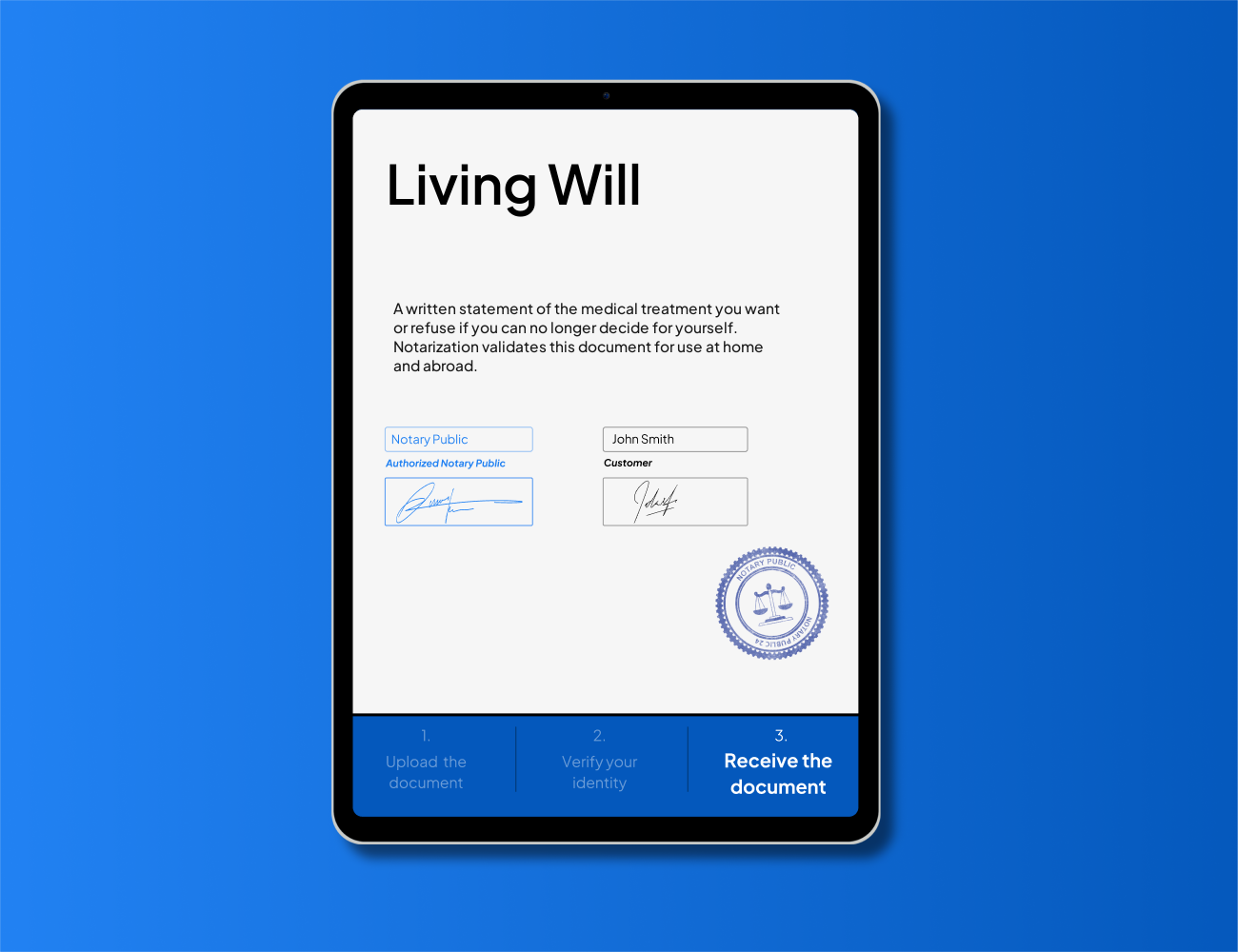
A living will is a legal document that tells doctors how you want to be treated if you cannot make your own decisions, for example about life support or resuscitation. The National Institute on Aging describes it as one of the two main advance directives.
The other is a health care power of attorney, which names a person to make decisions for you. Many states, including California, Georgia and Tennessee, combine both in one advance directive form.
A living will is not the same as a last will and testament. It covers medical care while you are alive, not what happens to your property after you die. Wishes about your funeral or personal belongings go in a letter of wishes alongside your will.
In most states, no. A living will is usually valid when you sign it in front of two adult witnesses. Many states let you have it notarized instead of using witnesses, including Arizona, California, Minnesota, Ohio, Texas and Washington.
Three states require a notary on top of the witnesses:
In California, an electronic advance directive must always be notarized.

Certifying documents should be easy. Our process only takes a few minutes, and you will receive your certified documents within 24 hours.
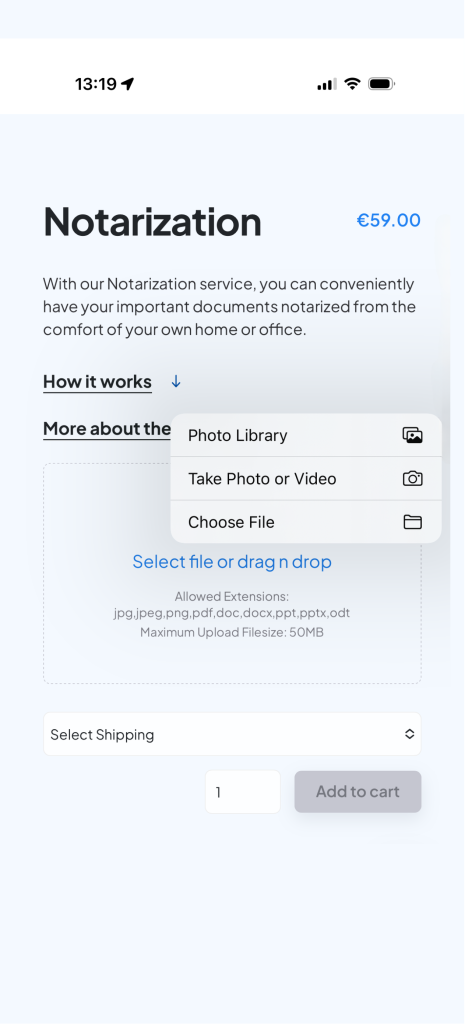
Upload the documents you need notarized or apostilled.
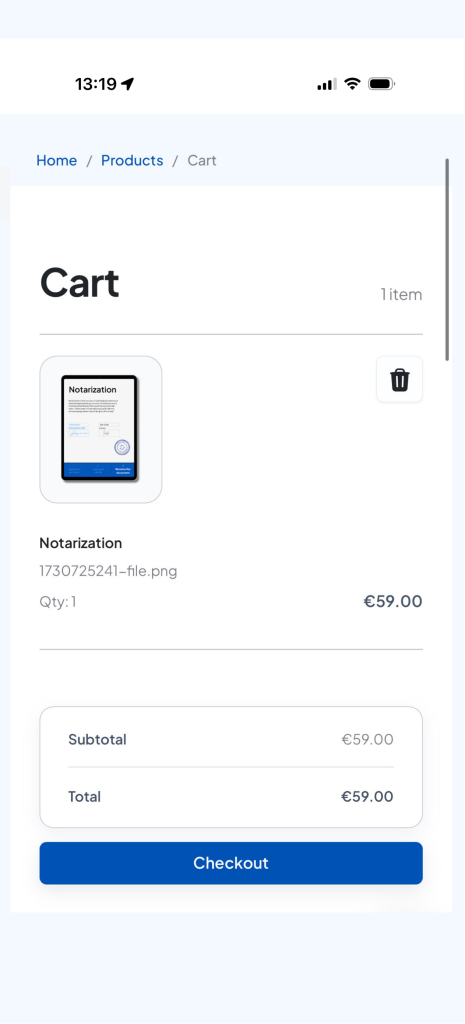
Complete the checkout process, secure and efficient.
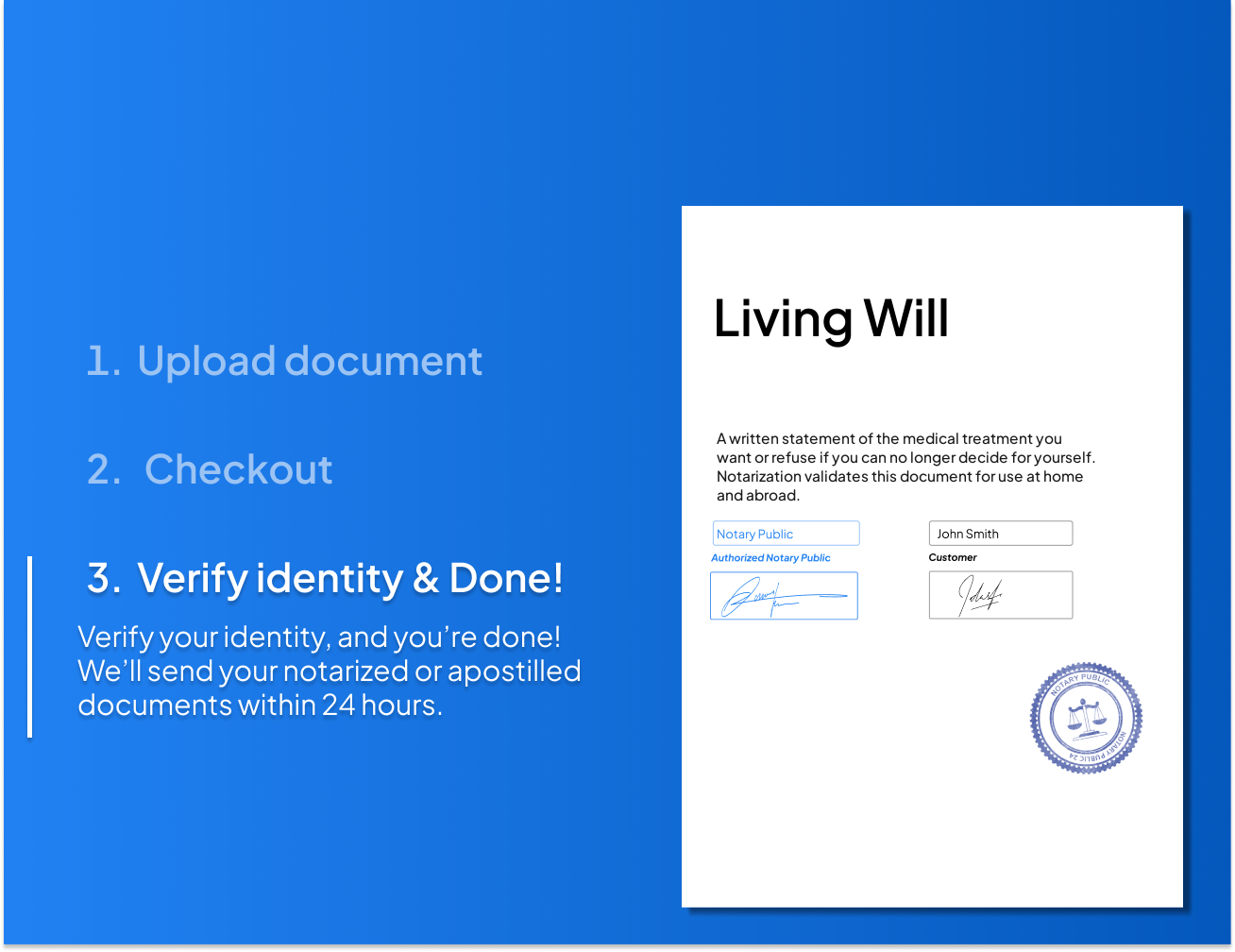
Verify your identity, and you're done! We'll send your notarized or apostilled documents within 24 hours.


The rules come from state law, and they change. These are examples we have checked against the statute or the official state form:
In England and Wales, the equivalent is an advance decision to refuse treatment. To refuse life-sustaining treatment, it must be in writing, signed, witnessed and include a statement that it applies even if your life is at risk, under section 25 of the Mental Capacity Act 2005. No solicitor or notary is needed, as the NHS explains.
A notary matters when the document is used in another country, for example if you retire abroad or have treatment there. The notary confirms your signature, and an apostille makes it recognisable in Hague Convention countries.
With NotaryPublic24 you upload your living will, verify your identity and sign in front of a notary online.

Looking for reliable Notary Public services? NotaryPublic24 provides a fully compliant notary service that adheres to all applicable laws and regulations. With our certified Notary Public professionals, we ensure efficient and secure document authentication.
No matter if you are in the need of notarizing documents, or obtaining an Apostille – we will guide and help you throughout the whole process.
Uncertain about your possibilities? Contact us in a way that fits you the best, either by emailing us at “info@notarypublic24.com”, using our “Free Consulting” website form, or by chatting with one of our experts through the live chat application.
Notarization is the official process of having a document legally verified by a notary public. A notary public is an authorized official who verifies the identities of the people signing a document and confirms that the signatures are authentic. This process makes the document legally recognized and trustworthy, helping to prevent fraud and ensuring its validity for important matters like buying a house, signing a contract, or creating a will.
An Apostille is a certificate that makes your document valid in other countries. It's like a stamp of approval that confirms your document is real and can be used in countries that are part of the Apostille Convention. This agreement between countries makes it easier to use important documents like birth certificates and marriage licenses abroad without needing any other certifications. The Apostille verifies the signatures and seals on your document, ensuring it's accepted as genuine.
A Notary Public is an authorized official who has the right to issue certain certificates. An example is the Apostille stamp. A Notary Public is authorized by the state and applies their official seal and signature to certify the documents.
In most US states, no. Two adult witnesses are usually enough, and many states accept a notary instead of the witnesses. North Carolina, South Carolina and West Virginia require a notary in addition to two witnesses, and California requires one for an electronic advance directive.
Most states require two adult witnesses. Arizona accepts one witness or a notary, and Utah has required no witness for health care instructions since 1 January 2026. Witnesses usually may not be your health care agent, your doctor or someone who inherits from you, so check your state's form.
A living will states which treatments you want or refuse. A health care power of attorney names a person who makes medical decisions for you when you cannot. Many states combine both in one advance directive form, and you can have both.
It depends on the state. Virginia allows a spouse or blood relative to witness. Florida requires at least one witness who is neither your spouse nor a blood relative. Texas and North Carolina have stricter rules for relatives, so follow the witness statement on your state's form.
In England and Wales, an advance decision to refuse treatment is legally binding if it is valid and applies to the situation. To refuse life-sustaining treatment, it must be written, signed, witnessed and state that it applies even if your life is at risk.
No, you do not have to be physically present to get an Apostille online. However, you need to verify your identity with a government issued ID.



Do you want a free consultation about your case, completely without obligation? Please fill in the form below and we will contact you within a few hours.