A release of liability is a written agreement in which one party gives up the right to hold another party legally responsible for an injury, loss or damage. It is signed before an activity, as a waiver, or after an incident, to settle a claim. NotaryPublic24 notarizes your release of liability online when you want proof of who signed it.
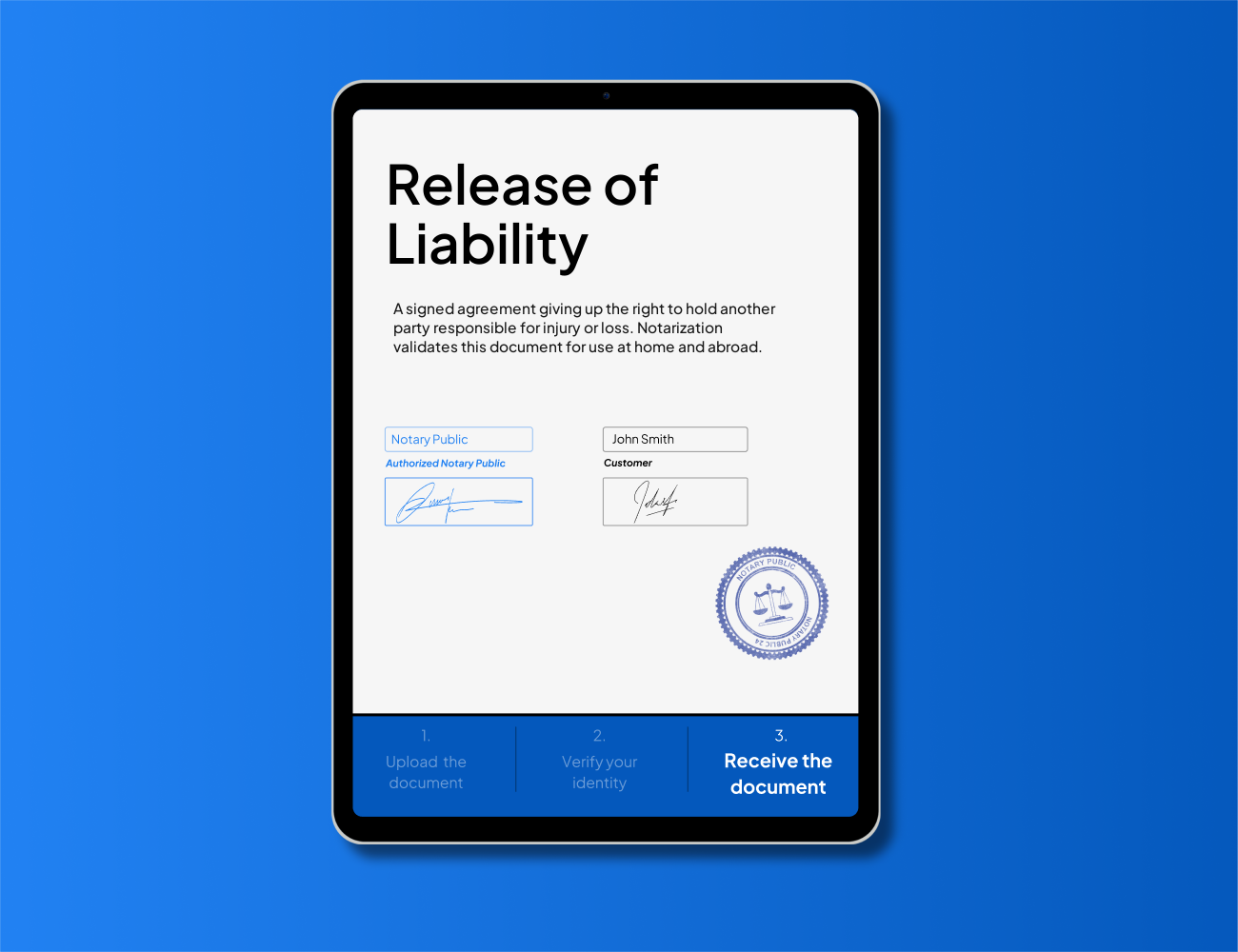
A release of liability, also called a liability waiver, is a written agreement in which one party gives up the right to hold another legally responsible for an injury, loss or damage.
State law sets limits. In California, contracts that exempt anyone from responsibility for their own fraud, willful injury or violation of law are against the policy of the law.
In New York, an agreement exempting a fee-charging pool, gym or place of amusement or recreation from liability for its own negligence is void and unenforceable. Louisiana Civil Code article 2004 makes a clause null if it excludes or limits liability in advance for causing physical injury.
It is not an affidavit of non-prosecution, a victim’s or witness’s sworn statement that they do not wish to press charges.
People use the term release of liability for three different documents:
According to the California DMV, its Notice of Transfer and Release of Liability means the seller is no longer legally responsible for violations after the vehicle’s date of sale. The seller must notify the DMV within 5 calendar days, and filing the notice does not transfer ownership.
Texas calls its version the Vehicle Transfer Notification. For the sale itself, see our bill of sale page and whether you need a notary to sell a car.

Certifying documents should be easy. Our process only takes a few minutes, and you will receive your certified documents within 24 hours.
Upload the documents you need notarized or apostilled.
Complete the checkout process, secure and efficient.
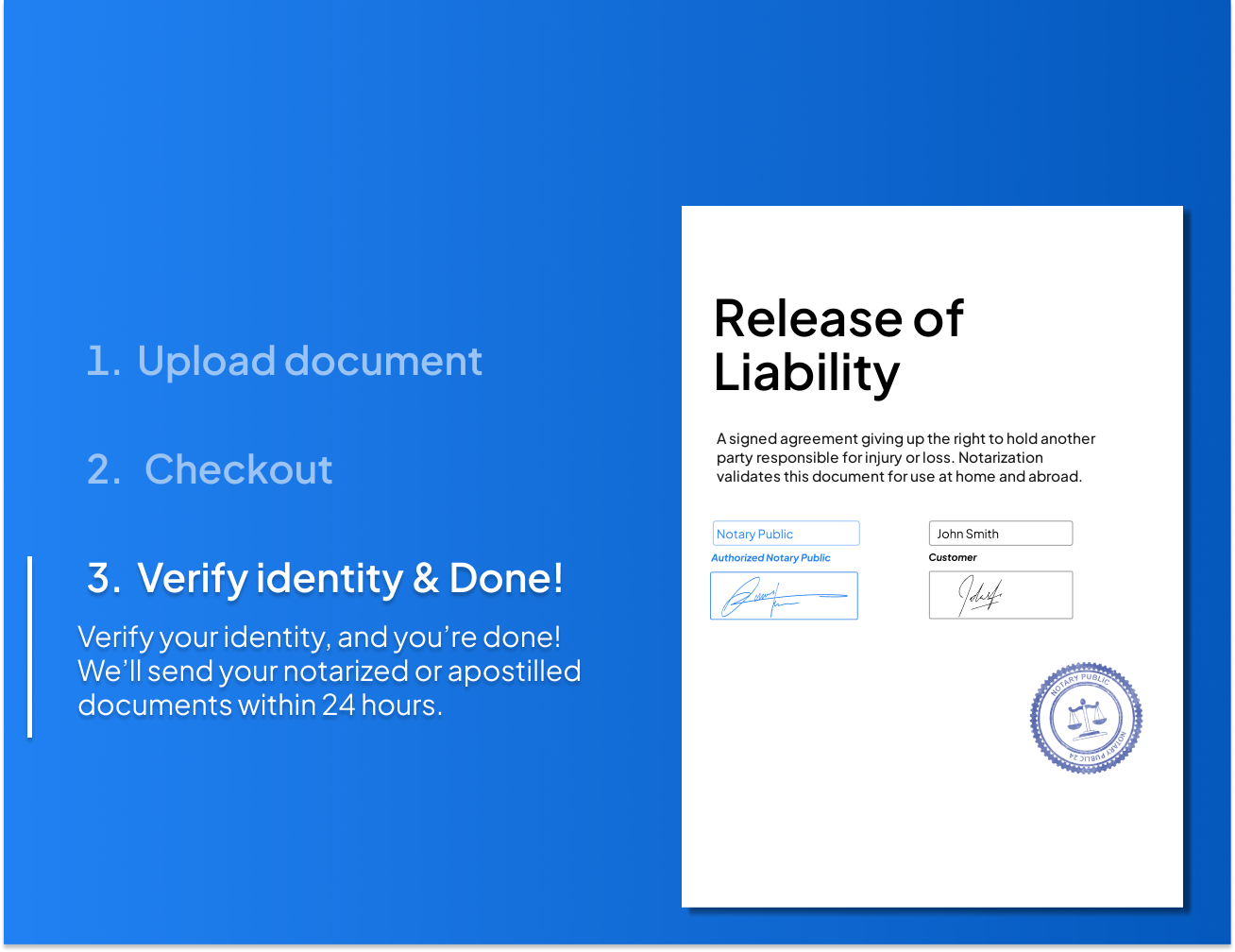
Verify your identity, and you're done! We'll send your notarized or apostilled documents within 24 hours.

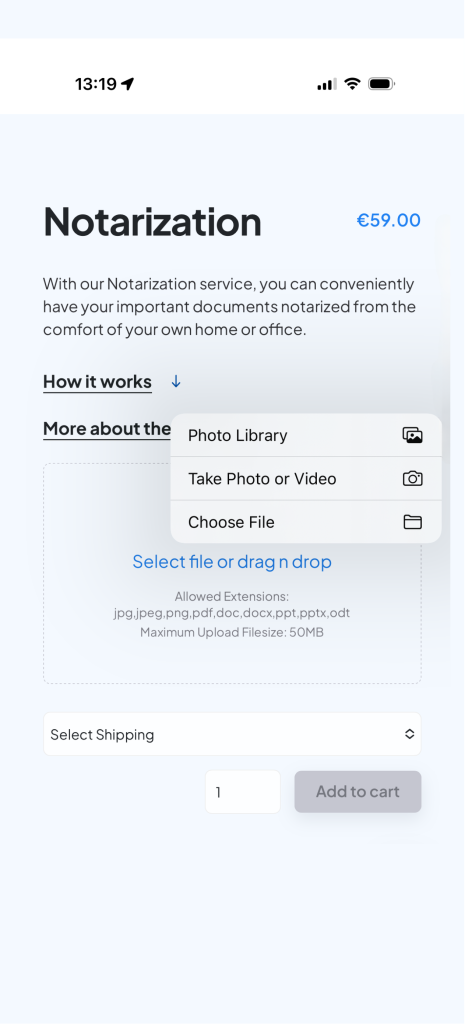
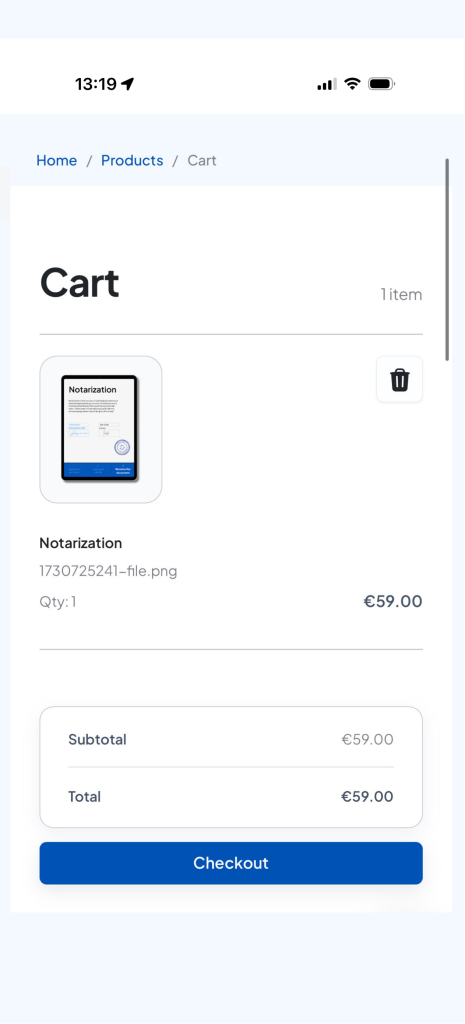

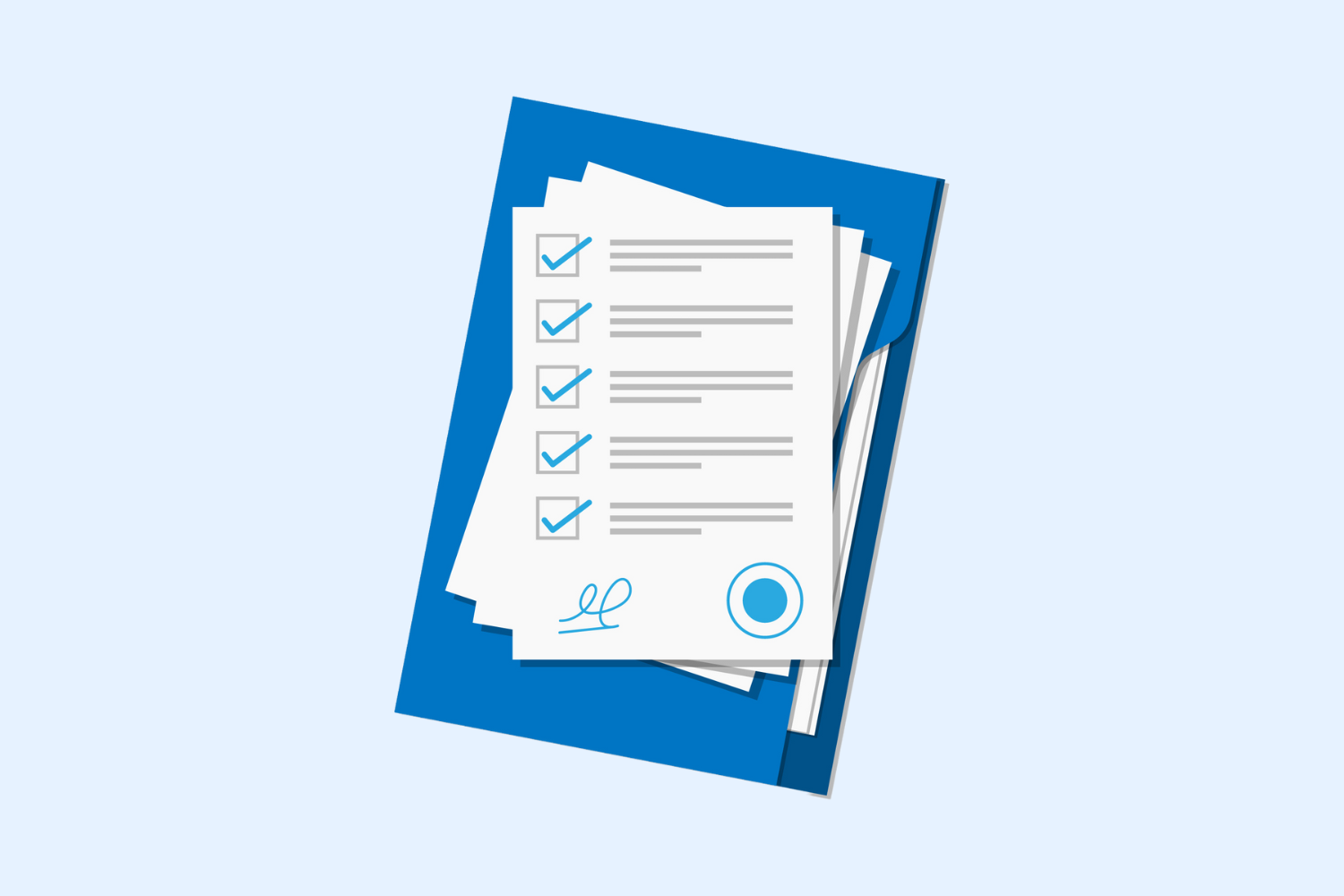
To write a release of liability, name the person giving up the claim and the person or business being released, describe the activity or incident, and state which claims are released. The person giving up the claim then dates and signs it.
Check your state’s rules before using a template. Montana, for example, requires a waiver for a sport or recreational activity to state the known inherent risks and to include a set warning in bold type.
For a release after an injury, list the claims it covers. In California, a general release does not extend to claims the releasing party does not know or suspect when signing, if knowing would have materially affected the settlement. To put facts on record under oath, use a sworn statement or an affidavit.
Usually not. None of the state rules on releases cited on this page asks for a notary. The other side can still ask for a notarized signature, so check before you sign.
A notarized release gives proof of who signed it. To notarize a document, the notary verifies the signer’s identity, confirms that the signer appears voluntarily and records the act in their official records. In California, a properly completed certificate of acknowledgment for a document other than a will is prima facie evidence of the facts it recites and that the signature is genuine.
With NotaryPublic24 you upload the release and complete a guided identity check, and a Notary Public is appointed to your case. There is no meeting, and you receive the notarized release as a secure PDF.

Looking for reliable Notary Public services? NotaryPublic24 provides a fully compliant notary service that adheres to all applicable laws and regulations. With our certified Notary Public professionals, we ensure efficient and secure document authentication.
No matter if you are in the need of notarizing documents, or obtaining an Apostille – we will guide and help you throughout the whole process.
Uncertain about your possibilities? Contact us in a way that fits you the best, either by emailing us at “info@notarypublic24.com”, using our “Free Consulting” website form, or by chatting with one of our experts through the live chat application.
Notarization is the official process of having a document legally verified by a notary public. A notary public is an authorized official who verifies the identities of the people signing a document and confirms that the signatures are authentic. This process makes the document legally recognized and trustworthy, helping to prevent fraud and ensuring its validity for important matters like buying a house, signing a contract, or creating a will.
An Apostille is a certificate that makes your document valid in other countries. It's like a stamp of approval that confirms your document is real and can be used in countries that are part of the Apostille Convention. This agreement between countries makes it easier to use important documents like birth certificates and marriage licenses abroad without needing any other certifications. The Apostille verifies the signatures and seals on your document, ensuring it's accepted as genuine.
A Notary Public is an authorized official who has the right to issue certain certificates. An example is the Apostille stamp. A Notary Public is authorized by the state and applies their official seal and signature to certify the documents.
A DMV release of liability form is a notice the seller files with the state motor vehicle agency after selling a vehicle. It is not a liability waiver. In California it is the Notice of Transfer and Release of Liability, and the seller must notify the DMV within 5 calendar days of the sale.
It depends on the state. In California, contracts exempting anyone from responsibility for their own fraud or willful injury are against the policy of the law. In New York, a fee-charging pool or gym cannot exempt itself from liability for its negligence. In Louisiana, a clause that excludes liability in advance for causing physical injury is null.
Usually not. None of the state rules on releases cited on this page asks for a notary. Notarization still gives proof of who signed it: the notary verifies the signer's identity, and in California a certificate of acknowledgment is prima facie evidence that the signature is genuine. Check whether the other side asks for a notarized signature before you sign.
The person giving up the claim signs the release of liability: the participant before an activity, or the injured person in a settlement. A DMV notice works differently. In California, it is the seller who notifies the DMV after the sale, within 5 calendar days.
Name the person giving up the claim and the person or business being released, describe the activity or incident, state which claims are released, and add the date and signature. Check your state's rules first: Montana, for example, requires sport and recreation waivers to state the known inherent risks and include a set warning in bold type.
No, you do not have to be physically present to get an Apostille online. However, you need to verify your identity with a government issued ID.



Do you want a free consultation about your case, completely without obligation? Please fill in the form below and we will contact you within a few hours.