
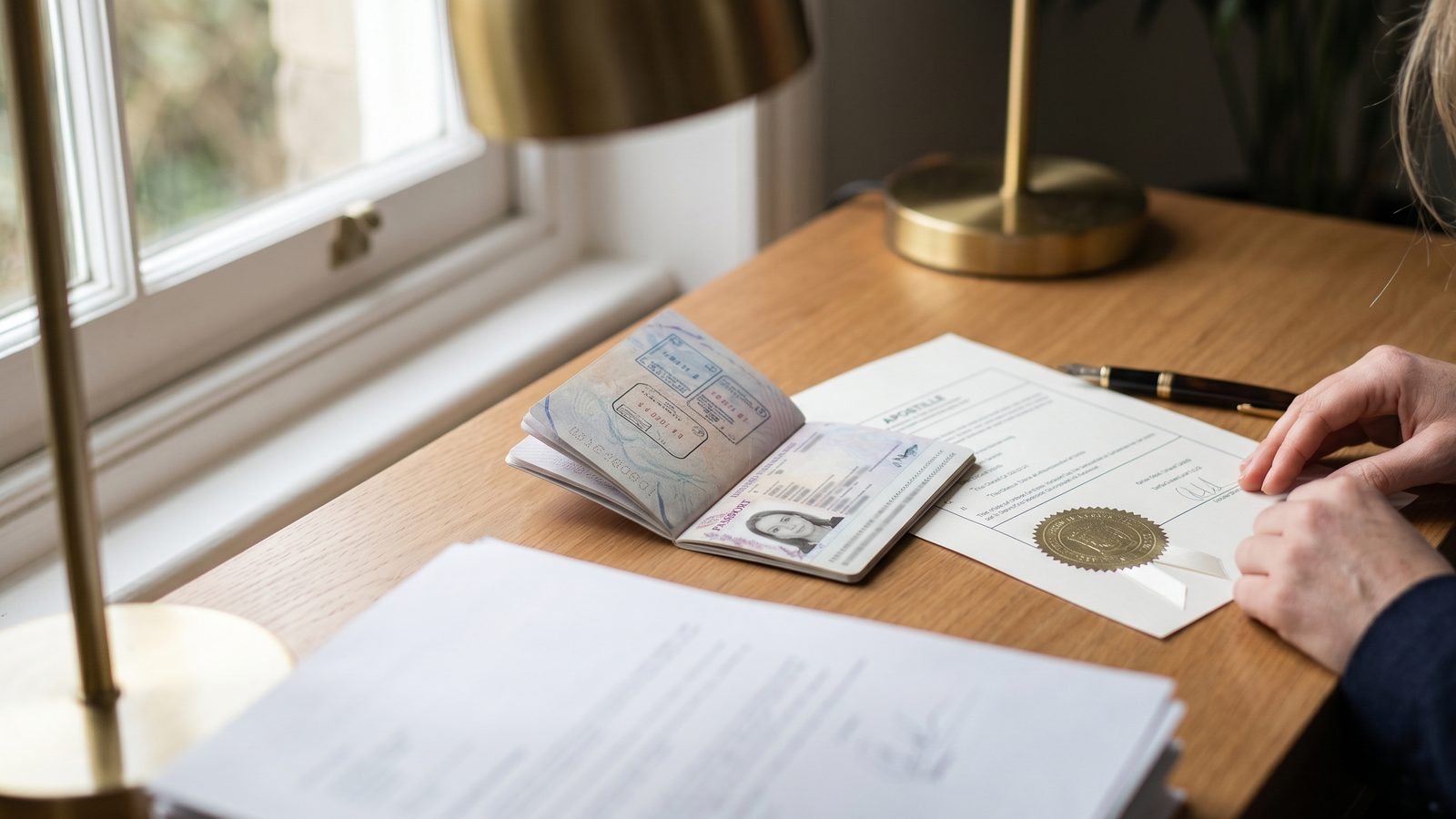
There are many affidavit types in the UK, and knowing which one you need – and how to have it sworn and notarized – can save you weeks of delay when a court, registrar, or overseas authority is waiting on your document. An affidavit is a written statement of fact that you swear or affirm to be true before an authorised official, and the same legal weight that makes it powerful also makes the formalities strict.
This guide explains the most common affidavit types, when each is used, how affidavits differ from the witness statements that have replaced them in many UK proceedings, and what to do when your affidavit needs to be accepted abroad. When that happens, we can help you swear, notarize, and Apostille your affidavit online with NotaryPublic24.
What is an affidavit?
An affidavit is a sworn statement of fact made in writing and confirmed under oath or affirmation before a person authorised to administer oaths – in the UK, that means a solicitor, a Notary Public, or a Commissioner for Oaths. By swearing the affidavit, you confirm that its contents are true to the best of your knowledge, and you accept that knowingly making a false statement can amount to perjury.
The person swearing the affidavit is the deponent – called the affiant in the US.
The structure is consistent across most affidavit types: it identifies the deponent, sets out the facts in numbered paragraphs, refers to any supporting documents (called exhibits), and ends with a jurat – the section recording where, when, and before whom the affidavit was sworn. Because an affidavit carries the same authority as sworn courtroom testimony, it is used wherever a formal, reliable record of facts is needed: in court applications, probate, immigration, property matters, and dealings with foreign governments.
Affidavits vs witness statements in the UK
One point causes more confusion than any other. Since the introduction of the Civil Procedure Rules, witness statements verified by a statement of truth have largely replaced affidavits for evidence in everyday civil proceedings in England and Wales.
A witness statement is not sworn before an official; the maker simply signs a declaration that its contents are true. Affidavits are still required for specific applications and are still widely used outside the civil courts.
You are most likely to need an affidavit, rather than a witness statement, for matters such as confirming your single status to marry abroad, swearing to a change of name, supporting an application for probate or dealing with a deceased person’s estate, declaring the loss of an important document, certain insolvency and freezing-order applications, and almost any situation where a foreign authority specifically asks for a “sworn affidavit”. For international use the distinction matters: overseas registrars and courts generally expect a properly sworn and notarized affidavit, not an unsworn statement.
Common affidavit types in the UK at a glance
The table below summarises frequently used affidavit types, the typical situation each addresses, and whether it is commonly needed for use abroad. Many of these documents can be prepared and notarized online.
| Affidavit type | Typical use | Often used abroad? |
|---|---|---|
| Single status / no impediment affidavit | Confirming you are free to marry, usually for a wedding overseas | Yes |
| Affidavit of identity | Confirming who you are where ID alone is not accepted | Yes |
| Affidavit of name change | Swearing to a personal or company name change | Sometimes |
| Affidavit of residence / domicile | Proving where you live or your permanent home | Yes |
| Affidavit of heirship / small estate | Establishing heirs or settling a modest estate | Yes |
| Affidavit of support | Confirming financial support, often for immigration | Yes |
| Affidavit of loss | Declaring a document or item has been lost | Sometimes |
| Affidavit of consent to travel | Permitting a minor to travel, often internationally | Yes |
| Financial affidavit | Setting out income, assets, and liabilities | Sometimes |
| Self-proving affidavit | Validating a will’s signatures without later testimony | Sometimes |
Personal and family affidavit types
Many affidavit types support everyday personal and family matters, particularly where official records need to be confirmed or where one country’s authorities want sworn evidence about your circumstances. An affidavit of identity confirms who you are when a passport or driving licence alone is not enough, and an affidavit of name change swears to a new name so that records, banks, and registrars can be updated.
An affidavit of residence proves where you live, while an affidavit of consent to travel gives sworn permission for a minor to travel, which border authorities frequently request when a child travels with one parent or another adult. Where you need to confirm citizenship for an overseas process, an affidavit of citizenship provides that sworn declaration.
Estate, financial, and property affidavit types
A second group of affidavit types deals with money, property, and what happens after someone dies. An affidavit of heirship records who is entitled to inherit, and a small estate affidavit can allow a modest estate to be settled without full probate.
An affidavit of domicile establishes a person’s permanent legal home, often needed to release assets, while a self-proving affidavit attached to a will confirms the signatures so witnesses do not have to be traced later. For financial matters, a financial affidavit sets out income, assets, and liabilities, and an affidavit of support confirms that one person will support another, a document that appears regularly in immigration applications.
Loss, fraud, and service affidavit types
Affidavits are also the standard tool for declaring that something has gone wrong or that a formal step has been taken. An affidavit of loss declares under oath that a document, certificate, or item has been lost or destroyed, which is usually required before a replacement is issued.
A forgery affidavit and an identity theft affidavit record sworn statements about fraud, and an affidavit of service confirms that legal documents were properly delivered to the other party. Where a simple, all-purpose sworn statement is needed, an affidavit of truth attests to facts you need to confirm under oath.
How to swear an affidavit in the UK
To be valid, an affidavit must be sworn or affirmed before someone authorised to administer oaths. You read or confirm the statement, then either swear an oath (often on a religious text) or make an affirmation, which is a secular alternative with exactly the same legal effect.
The official then completes the jurat and signs, and any exhibits are marked and initialled. For an affidavit used only within the UK, a Commissioner for Oaths or solicitor can administer the oath for a fixed statutory fee – currently £5 for the oath, plus £2 for each exhibit.
The picture changes when the affidavit is destined for use abroad. In that case you should have it notarized by a Notary Public, who not only administers the oath but also applies a notarial certificate that international authorities recognise.
Depending on the destination country, the notarized affidavit may then need an Apostille or further embassy legalisation before it is accepted. Our guide to notarizing an affidavit in the UK walks through the requirements in more detail.
Using an affidavit abroad: notarization and Apostille
An affidavit sworn in the UK is not automatically valid in another country. If an overseas registrar, court, university, or government department has asked for your sworn statement, you almost always need it notarized first.
Notarization is the step where a Notary Public confirms your identity, administers the oath or affirmation, and applies a notarial certificate giving the affidavit weight abroad. For countries that belong to the 1961 Hague Convention, the next step is an Apostille, a standardised certificate confirming the authenticity of the notary’s signature and seal so the affidavit is recognised across all member states.
For countries outside the Convention, additional embassy or consular legalisation may be needed.
This international layer is precisely what our service handles, so you do not have to coordinate a Notary Public appointment and a separate submission to the Foreign, Commonwealth & Development Office yourself. You can manage the whole process online and track it through to delivery.
How to notarize and Apostille your affidavit with NotaryPublic24
Our online process means you can have an affidavit sworn, notarized, and – where needed – Apostilled without leaving home:
- Choose your service. Select affidavit notarization on its own, or add an Apostille if your affidavit will be used in a Hague Convention country.
- Prepare and upload your affidavit. Draft your statement, or start from our affidavit form, then upload it and verify your identity online with a government-issued photo ID. This stage is asynchronous, with nothing to schedule yet.
- Swear before your Notary Public. Where the document requires it, you attend a short digital meeting with your appointed Notary Public, who administers the oath or affirmation, witnesses your signature, and applies the notarial certificate.
- We arrange the Apostille. If you have chosen Apostille, we submit your notarized affidavit to the relevant authority and return it as a secure digital or paper certificate.
- Receive your finished affidavit. Your notarized – and, if required, Apostilled – affidavit is delivered electronically, with tracked post available where an original is needed.
Notarized affidavits are typically returned within a few working days, the digital e-Apostille route usually completes in around two to three working days where the destination accepts it, and the paper Apostille route allows two to three weeks for tracked delivery. You can review the affidavit notarization service in full, or browse our complete range of notarization and Apostille services.
Related guides
Affidavits often travel alongside other legal documents. If you are also arranging delegated authority for a family member or a transaction abroad, read our explanation of the UK power of attorney types and when each applies.
Together, affidavits and powers of attorney cover most of the sworn and delegated documents people need when dealing with authorities at home and overseas.
Frequently Asked Questions
What are the most common affidavit types in the UK?
Common affidavit types in the UK include the single status affidavit for marrying abroad, the affidavit of identity, the affidavit of name change, the affidavit of residence or domicile, the affidavit of heirship and small estate affidavit, the affidavit of support, and the affidavit of loss. Each one swears specific facts before an authorised official.
What is the difference between an affidavit and a witness statement?
An affidavit is sworn or affirmed before a solicitor, Notary Public, or Commissioner for Oaths, while a witness statement is simply signed with a statement of truth. Since the Civil Procedure Rules, witness statements have replaced affidavits for most civil evidence, but affidavits are still required for specific applications and for many overseas authorities.
How do I swear an affidavit in the UK?
You confirm your written statement and then swear an oath or make an affirmation before a Commissioner for Oaths, solicitor, or Notary Public, who completes the jurat and marks any exhibits. The statutory fee for swearing before a Commissioner for Oaths is £5, plus £2 per exhibit, for affidavits used within the UK.
Does an affidavit need to be notarized for use abroad?
Yes. An affidavit intended for use in another country should be notarized by a Notary Public, who administers the oath and applies a notarial certificate. For Hague Convention countries the notarized affidavit then needs an Apostille, and for other countries further embassy legalisation may be required before it is accepted.
Can I notarize an affidavit online?
Yes. With NotaryPublic24 you upload your affidavit, verify your identity with a government-issued photo ID, and complete the notarial act online. Where required, you attend a short digital meeting with your appointed Notary Public. We can also arrange the Apostille and return your finished affidavit electronically or by tracked post.
Which affidavit do I need to get married abroad?
To marry abroad you usually need a single status affidavit, also called an affidavit of no impediment, sworn before a Notary Public. Many overseas registrars require it to be notarized and Apostilled, particularly in countries that do not accept the UK Certificate of No Impediment, so it is wise to confirm the destination’s requirements before you travel.